
Block paving sealer facts
There are some sites selling cheap sealerHow do they do it?........Simple
- Paint resin polymer (not tough enough for driveways & paving)
- Low grade polymer (poor performance)
- Made from recycled paint (paint with the colour stripped out)
- Made with low grade white spirit & Turps
- Polymer resin content is very low
- Poor quality imported product
ALL SEALERS ARE NOT MADE EQUAL
These products are not the same as ours
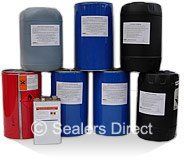
Our paving sealers are British manufactured (by us) using the very best performing high quality polymers and solvents
HIGH RESIN HD POLYMER CONTENT
No Fillers - No Thickeners - No Extenders
No White Spirit - No Turps
- High solids pure resin content
- HD Tough and durable
- One or two coat application
- Non yellowing
- UV stable
- Bonds and stabilises jointing sand rock hard in block paving joints
Block paving sealer information and advice
Which is your most popular product for sealing block paving?
For non-enhancing colour it is our Eco HD block paving sealer
For colour enhancing it is our **1COAT
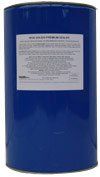
Premium Ultra HD block paving sealer
How do I use the product?
Using our products are straightforward; a good tip to remember is apply sealers in dry conditions and ensure the surface is dry.
You can apply sealer by:
- Coarse droplet low level
pressure sprayer
- Roller
- Broom
- Brush
Most contractors these days will use a sealer sprayer that is made specifically for the job. Garden chemical sprayers are not right for the job as they block up quickly and produce a conical spray pattern most of the time. The ideal spray pattern should be a fan jet. Application instructions can be found on the product page and each container is labelled.
What does 'solids' mean?
'Solids' is an alternative description for the resin polymer within the product. This description gives you an indication of the resin content within the sealer.
The higher the resin content, the more resin is left on the paving and the more effectively the paving is sealed
Most paving sealers available from builders' merchants, big DIY stores and some websites are very low resin solids
Is solids content most important?
Solids content should be a consideration along with choice of resin, quality and performance
What coverage should I get from 20 litres (1 drum) of sealer?
This is a bit of a grey area as some surfaces are more porous than others. For example, block paving is more porous than printed concrete, so block paving will take more product per square mtr. The application method also makes a difference, you may find that rolling or brushing makes the product go further than spraying.
There is a difference between the correct coverage and making the sealer spread as far as possible, the more you spread the product, then the less product you will end up with on each square mtr and the less each square mtr is sealed.
You won’t save money by making the sealer spread as far as possible, also performance will reduce. Coverage rates should only be taken as a guide. See product data sheets.
Which are better: Acrylic (Ultra HD) or Polyurethane (PU) sealers?
The true answer is that Ultra HD Acrylic & PU's are both good, are suited to different applications and prices differ
You also have to consider the use of the surface to be sealed, ease of application, and the applicator's skill and experience level as PU's can be very unforgiving to the DIY'er and even tradesmen
The most commonly used is the acrylics due to ease of use and how easy it is to rectify a mistake
Cost is a big factor. Our * 1 COAT Ultra HD (ultra high resin, heavy duty) acrylic sealer is very cost effective for the level of quality it provides compared to a true PU. Plus you get FREE UK MAINLAND SHIPPING
An equivalent TRUE polyurethane sealer will be around £240 for 23L
We use the word TRUE because cheap polyurethane sealers you see advertised for under £150 will be blended with other cheap polymers to bring the cost down, and/or a low resin content
For example: 1% PU mixed with another polymer can still be called a PU and will be priced low to attract buyers but won't perform as a true PU
Another easy way to judge the sealer quality is if white spirit or turpentine (turps) is recommended for cleaning equipment as opposed to much stronger solvents eg. Xylene, Naptha
White Spirit and Turps are used with paint polymers
What will happen if I get caught out by the rain or residual damp after I’ve just sealed my paving?
Our Eco HD solvent free range will not be affected but you will probably need to apply another coat when dry
All solvent based sealers will probably bloom
Our Premium range is specially formulated to resist blooming where possible
What’s a bloom?
A bloom in the sealer can take the appearance of a milky white or silvery cloud affect and may be apparent in patches, spots or across the whole area after drying
How do I rectify a bloom?
Our Premium range: Easy fix
When dry, brush or spray bloom rectifier to affected areas only
Repeat if necessary, allow to dry and re-coat
If you experience a bloom in your finished sealed surface please understand that this is not a product fault and is rectifiable
Polyurethane: A very hard & costly fix
Not as simple, bloom rectifier will have no effect
PU sealer will have to be mechanically removed (diamond abraded or grit blasted)
If you need any further information please drop us a line below or call Nigel direct on: 07899 748333 (factory mobile)

For further installation advice please download our guides, email, or call for technical advice on:
Office
01202 620 377
Factory mobile
07899 748333
sealersdirect@gmail.com